


TFT Dev's Post Set Learnings (Research)
[WK 2-4] Genre and Industry Research
Teamfight Tactics
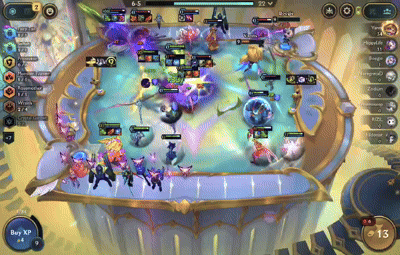

System Terminology
Traits = a characteristic each unit might have 1 or more of
Synergies = a bonus granted when enough units of the same trait have been placed on the board. Sometimes this is explicit i.e. in TFT you have to place down explicit numbers of units to activate an explicit bonus or this might be implicit i.e. in HB unit abilities will often synergies with the abilities of other units of the same trait
Key Questions To Consider
What defines good traits / synergies?
How are sets defined by themes? How does this affect the gameplay / the feel of the set?
What do devs do to reinforce the feeling of a particular set / season?
How do proffessionals in the industry develop traits / synergies?
TFT Set Popularity
Unpopular Sets:
Set 1 / 2 / 5 – unpopular set mechanics, particularly the mechanic in Set 5 shadow items is disliked a lot. Generally viewed as unbalanced and a lack of strategic felxibility.
Set 14 cyber city – lots of people heavily dislike this set. Players comment that it’s confusing and it feels very RNG based.
Controversial Set: Set 7 – Dragonlands – highest power creap, lots of traits gave lots of econ however that meant that if you didn’t have one of those traits you were quite behind. Devs hated dragons. Dragonflight was unbalanced but really fun. In 7.5 comps became quite standard. People enjoyed treasure dragon and anvil drops. Dragon units took up multiple slots meaning you could put less units on the board and make less interesting comps.
Boring Set: Set 11 – Inkborne Fables
Popular Sets:
Set 6 = Gizmo’s and Gadgets - It makes sense that 6 was quite popular because Gizmo’s and Gadgets added a new feature to the game called augments. This added more variation to comps allowing players to be more creative in their comp choices and allowing players to develop new strategies to acquire different champs.
Set 3 = Galaxies - lots of people comment on the lack of balance and actually found frustrating things about it however people also say this is their favourite set. “Had the best mid set improvements”. Perhaps the lack of balance was what made it fun to players because sometimes there would be outrageous comps / possibilities come up that were exciting. Players liked the portal mechanic however didn’t like the portals in that set. The portal mechanic was carried on becoming a permanent part of the game although players don’t vote on one at the start. The game will randomly generate a game effect.
Set 10 = Remix Rumble – A bit of an exception because of the particularly niche mechanic, where placing different units would remix the music. However, lots of people do comment on its good level of balance.
Genre Research Conclusions
Key Takeaways
Stat based vs Niche mechanic Traits
Players remember fun unique traits like space pirate and mech pilot from set 3 or mutant and yordles from set 6. The bard trait was also fun as well as mages and shapeshifters. Although It’s also important to have a balance of new mechanic traits with stat based ones because stat-based traits are more accessible to new / low-skilled players to and offer comp variability.
Balance
Players don’t necessarily want the game to be perfectly balanced. Set 6 is consistently mentioned by players to be their favourite set even though they also recognise it was an unbalanced set. The most important thing to balance correctly is to prevent the emergence of dominant strategies. This makes the game boring because it becomes predictable and it becomes about who gets the right units appear in the shop as opposed to who makes the best combination of decisions. However, players don’t want to play a set in which each team is equally as powerful as each other in every regard. Being able to maximise the thing a trait is good at makes a team powerful but also makes it highly enjoyable to play.
Some traits or units might be really strong however they might be difficult to acquire, meaning it might require the precise execution of the right choices at every stage. This is rewarding for skilled players because they can access stronger teams by performing skilfully. This can also be rewarding for low skilled players because there’s an element of chance that might allow the player to access a stronger build.
On the flip side some traits / units might be inherently weaker that allow low-skilled players to access the game without having to understand all the systems intimately. The weaker traits also offer high-skilled and creative players variation because they might choose to mix and match a team with some from a weaker team to gain a particular benefit.
Process for Ideation
Step One: Establish an overall theme for the set
-
Create list of possible themes
-
Choose one
-
Extrapolate tone
Step Two: Brainstorm trait ideas
-
List dogs that would fit into the theme
-
Research traits from TFT
-
Develop example traits that would fit the theme and write brief description of how they'd fit into the theme
Step Three: Finalization
-
Test cohesiveness of the set
-
Test how exciting each trait is
-
Test how easy to understand the traits are
-
Balance power / fantasy to cost